quarta-feira, 17 de abril de 2013

La Flèsche Wallone 2013, resultados e ultimos kilometros
| 1 | Daniel Moreno Fernandez (Spa) Katusha | ||
| 2 | Sergio Luis Henao Montoya (Col) Sky Procycling | ||
| 3 | Carlos Alberto Betancur Gomez (Col) AG2R La Mondiale | ||
| 4 | Daniel Martin (Irl) Garmin-Sharp | ||
| 5 | Michal Kwiatkowski (Pol) Omega Pharma-Quick Step | ||
| 6 | Joaquim Rodriguez Oliver (Spa) Katusha | ||
| 7 | Alejandro Valverde Belmonte (Spa) Movistar Team | ||
| 8 | Igor Anton Hernandez (Spa) Euskaltel-Euskadi | ||
| 9 | Bauke Mollema (Ned) Blanco Pro Cycling Team | ||
| 10 Rinaldo Nocentini (Ita) AG2R La Mondiale |
La Flèche Wallone 2013
Mais uma prova clássica do circuito mundial. 205 kms, com 12 setores de subidas , que apesar de curtas , a maior tem 2,7 kms, os gradientes de inclinação são altos. (ver quadro abaixo).
25 equipes estarão na prova destacando- se , Contador, Sagan, Joaquim Rodriguez,Valverde, Nairo, Phillipe Gilbert, Ryder Hesjedal, Cunego, Dennis Vanendert e a forte equipe da Colômbia, pais que tem se destacado com vários atletas nas equipes dos Pro Tour.
Esta prova também tem uma edição feminina no mesmo dia com 22 equipes.
Video da prova de 2012
Últimos vencedores
2012 Joaquim Rodriguez (Spa) Katusha 194km in 4.45.41 (40.74 km/h)
2011 Philippe Gilbert (Bel) Omega Pharma-Lotto 201km in 4.54.57 (40.888 km/h)
2010 Cadel Evans (Aus) BMC Racing Team 195.5km in 4.39.24 (41.98 km/h)
2009 Davide Rebellin (Ita) Gerolsteiner 204km in 4.41.15 (41.56 km/h)
2008 Kim Kirchen (Lux) Team High Road 199.5 km in 4.35.29 (43.45 km/h)
2007 Davide Rebellin (Ita) Gerolsteiner 202.5 km in 4.48.06 (42.173 km/h)
2006 Alejandro Valverde (Spa) Caisse d'Epargne 202.0 km in 4.42.45 (42.865 km/h)
2005 Danilo Di Luca (Ita) Liquigas-Bianchi 201.5 km in 4.44.55 (42.43 km/h)
2004 Davide Rebellin (Ita) Gerolsteiner 199.5 km in 4.31.33 (44.08 km/h)
2003 Igor Astarloa (Spa) Team Saeco 198 km in 4.39.17 (42.86 km/h)
2002 Mario Aerts (Bel) Lotto-Adecco 198 km in 4.42.04 (42.117 km/h)
2001 Rik Verbrugghe (Bel) Lotto Adecco 198 km in 4.50.03 (40.958 km/h)
2000 Francesco Casagrande (Ita) Vini Caldirola 198 km in 4.53.08 (40.53 km/h)
MOUNTAIN PASSES & HILLS
Binche Huy - 205 km
Km 76.5 - Côte de Naninne - 2.6 km climb to 3.7 %
Km 90.0 - Côte de Groynne - 2.0 km climb to 3.5 %
Km 108.5 - Mur de Huy - 1.3 km climb to 9.3 %
Km 127.5 - Côte d'Ereffe - 2.1 km climb to 5.9 %
Km 146.0 - Côte de Peu d'Eau - 2.7 km climb to 3.9 %
Km 151.0 - Côte de Bellaire - 1.0 km climb to 6.8 %
Km 158.5 - Côte de Bohisseau - 1.3 km climb to 7.6 %
Km 161.5 - Côte de Bousalle - 1.7 km climb to 4.9 %
Km 173.5 - Mur de Huy - 1.3 km climb to 9.3 %
Km 190.0 - Côte d'Amay - 1.5 km climb to 6.7 %
Km 196.5 - Côte de Villers-le-Bouillet - 1.2 km climb to 7.5 %
Km 205.0 - Mur de Huy - 1.3 km climb to 9.3 %
PROFILE OF THE STAGE
Binche Huy - 205 km

25 equipes estarão na prova destacando- se , Contador, Sagan, Joaquim Rodriguez,Valverde, Nairo, Phillipe Gilbert, Ryder Hesjedal, Cunego, Dennis Vanendert e a forte equipe da Colômbia, pais que tem se destacado com vários atletas nas equipes dos Pro Tour.
Esta prova também tem uma edição feminina no mesmo dia com 22 equipes.
Video da prova de 2012
Últimos vencedores
2012 Joaquim Rodriguez (Spa) Katusha 194km in 4.45.41 (40.74 km/h)
2011 Philippe Gilbert (Bel) Omega Pharma-Lotto 201km in 4.54.57 (40.888 km/h)
2010 Cadel Evans (Aus) BMC Racing Team 195.5km in 4.39.24 (41.98 km/h)
2009 Davide Rebellin (Ita) Gerolsteiner 204km in 4.41.15 (41.56 km/h)
2008 Kim Kirchen (Lux) Team High Road 199.5 km in 4.35.29 (43.45 km/h)
2007 Davide Rebellin (Ita) Gerolsteiner 202.5 km in 4.48.06 (42.173 km/h)
2006 Alejandro Valverde (Spa) Caisse d'Epargne 202.0 km in 4.42.45 (42.865 km/h)
2005 Danilo Di Luca (Ita) Liquigas-Bianchi 201.5 km in 4.44.55 (42.43 km/h)
2004 Davide Rebellin (Ita) Gerolsteiner 199.5 km in 4.31.33 (44.08 km/h)
2003 Igor Astarloa (Spa) Team Saeco 198 km in 4.39.17 (42.86 km/h)
2002 Mario Aerts (Bel) Lotto-Adecco 198 km in 4.42.04 (42.117 km/h)
2001 Rik Verbrugghe (Bel) Lotto Adecco 198 km in 4.50.03 (40.958 km/h)
2000 Francesco Casagrande (Ita) Vini Caldirola 198 km in 4.53.08 (40.53 km/h)
MOUNTAIN PASSES & HILLS
Binche Huy - 205 km
Km 76.5 - Côte de Naninne - 2.6 km climb to 3.7 %
Km 90.0 - Côte de Groynne - 2.0 km climb to 3.5 %
Km 108.5 - Mur de Huy - 1.3 km climb to 9.3 %
Km 127.5 - Côte d'Ereffe - 2.1 km climb to 5.9 %
Km 146.0 - Côte de Peu d'Eau - 2.7 km climb to 3.9 %
Km 151.0 - Côte de Bellaire - 1.0 km climb to 6.8 %
Km 158.5 - Côte de Bohisseau - 1.3 km climb to 7.6 %
Km 161.5 - Côte de Bousalle - 1.7 km climb to 4.9 %
Km 173.5 - Mur de Huy - 1.3 km climb to 9.3 %
Km 190.0 - Côte d'Amay - 1.5 km climb to 6.7 %
Km 196.5 - Côte de Villers-le-Bouillet - 1.2 km climb to 7.5 %
Km 205.0 - Mur de Huy - 1.3 km climb to 9.3 %
PROFILE OF THE STAGE
Binche Huy - 205 km
terça-feira, 16 de abril de 2013
segunda-feira, 15 de abril de 2013
Os Pneus da Paris Roubaix
Matéria enviada pos Alexandre Zulu
fonte:http://velonews.competitor.com/2013/04/news/under-pressure-tire-tech-from-paris-roubaix-2013_281135/attachment/tires-of-roubaix

ROUBAIX, France (VN) — There is a sphere of physical force within which most cycling gear is designed to excel. Paris-Roubaix is nowhere near it.
The equipment used on this single Sunday in April is special, so much so that it is rarely touched for the hundreds of other racing days on the calendar. There is no race on the planet that is tougher on equipment than Paris-Roubaix.
Wheels and tires bear the brunt of the brutish day, and receive special attention as a result. Riders and mechanics spend days on the cobbles, fine-tuning product choice and tire pressure.
The conclusions they draw, though, are somewhat varied. Pressures range from the low 60psi to nearly 90. Tire widths can be as narrow as 24-25mm and as wide as 30mm. Rim types span from box section to 50mm aerodynamic shapes and nearly everything in between.
Team Sky even went as far as to test the effects of filling its FMB Paris-Roubaix tubulars with nitrogen rather than regular air (which is 78 percent nitrogen anyway). The goal is to solve a problem that has plagued racers for decades: preventing the slow drop in tire pressure that occurs with the high-end, hand-built, latex-tubed tubulars used at Roubaix.
Nitrogen molecules migrate through rubber more slowly, theoretically slowing the decrease in tire pressure teams see throughout the race. But filling a tire with 100 percent nitrogen is a time-consuming process, and Sky decided to skip the hassle come race day.
“We tried it. These tubulars lose a lot of air; they lose up to a bar (15psi) over the course of a race,” said Sky mechanic Gary Blem. “That’s a lot. We tested to see if filling the tires with nitrogen would slow that down. We didn’t see much change. Or anything, really. Not enough to make it worth the effort.
“But we will keep looking into it. The way we inflate them could change, and maybe make it more effective.”
In the end, Sky ended up running regular old air, and would not provide specific pressure figures. Blem said only that all his tires were “under 5.5 bar,” or about 80psi.
“We didn’t have a single puncture last year,” he said. “So we know what they can handle, and we know how low they can go.”
Once again, the two French handbuilt brands, FMB and Dugast, stole the day. Cancellara swapped out the FMB 25mm tires he used at Flanders for a 27mm set, giving the small company its second win in as many weeks.
Cancellara inflated his FMBs to a relatively high 81psi (front) and 88psi (rear).
“He tends to run high pressure, on and off the cobbles,” said Trek team liaison Jordan Roessingh.
Dugast was found throughout a number of French squads, among them Europcar, FDJ, and Cofidis, but never covered every wheel. The Dugast Roubaix tires feature a tall, sharp tread that is generally preferred for those editions of Roubaix that see a bit more precipitation; this year, the course was in good condition. Relatively speaking, of course.
A few riders went with the massive 30mm Dugasts anyway, likely just for the extra cushion they provide, paved sections be damned.
Runner-up Sep Vanmarcke and the rest of his Blanco squad were on unlabeled, but certainly handmade, 27mm tubulars. The tread pattern appears to be off a Veloflex Roubaix, but the casing doesn’t match their current offerings; it’s entirely possible that the black casing was a special run, of course.
Team Sky
Wheels: Shimano Dura-Ace C50
Tires: FMB Paris Roubaix 27
Tire size: 27mm (28mm actual size)
Pressure: Precise numbers are secret, “every tire is under 5.5bar (80 psi)”
FDJ
FMB Paris Roubaix 27
Wheels: Shimano Dura-Ace C35
Tires: Unlabeled. Appear to be Dugast
Tire size: 27 and 30mm
Pressure: 70 front, 80 rear
Saxo Bank-Tinkoff Bank
Wheels: Zipp 303 Firecrest
Tires: FMB Paris Roubaix (rebadged as Specialized)
Tire size: 27mm
Pressure: secret
AG2R
Wheels: Fulcrum Racing Speed XLR
Tires: FMB Paris Roubaix
Tire size: 27
Pressure: 63 front, 75 rear
RadioShack-Leopard
Wheels: Bontrager Aeolus 5 D3
Tires: FMB Paris Roubaix
Tire size: 27mm
Pressure: Cancellara used 5.6bar (81psi) front and 6.1bar (88bar) rear
Omega Pharma-Quick Step
Wheels: Zipp 303 Firecrest
Tires: Specialized labeled, appear to be FMB Paris Roubaix
Tire size: 27
Pressure: Terpstra had less than 60psi front and under 65 rear
Katusha
Wheels: Mavic Cosmic Carbone and M40
Tires: Unlabeled, appear to be FMB Paris Roubaix
Tire size: 27mm
Pressure: Less than 6 bar (87psi)
Cannondale
Wheels: Vision Metron 40
Tires: Unlabeled, appear to be FMB Paris Roubaix
Tire size: 27mm
Pressure: secret
Astana
Wheels: Corima Viva S, custom built with stronger rims
Tires: FMB Paris-Roubaix
Tire size: 27mm
Pressure: secret
Vacansoleil-DCM
Wheels: FFWD F2R and F4R
Tires: Veloflex Ardennes
Tire size: 27mm
Pressure: secret
Endura NetApp
Wheels: Oval
Tires: Vittoria Pave 2
Tire size: 27mm
Pressure: 81psi front, 87 rear
Bretagne-Seche Environnement
Wheels: Miche
Tires: Michelin Pro4 Service Course
Tire size: 25mm
Pressure: 75 front, 82 rear
Movistar
Wheels: Campagnolo Hyperon
Tires: Vittoria Pave
Tire size: 27
Pressure:
Euskaltel-Euskadi
Wheels: Shimano Dura-Ace C35
Tires: Vittoria Pave
Tire size: 27
Pressure: “less than 6 bar (87psi)”
Europcar
Wheels: Campagnolo Bora Ultra
Tires: Unlabeled, appear to be mixed Dugast and FMB
Tire size: 27-30mm
Pressure: “variable”
Argos-Shimano
Wheels: Shimano Dura-Ace C35 and C50
Tires: Unlabeled, appear to be Veloflex Roubaix
Tire size: 27mm
Pressure: John Degenkolb ran 5 bar (72psi) front and 5.3 bar (76psi) rear
Orica-GreenEdge
Wheels: Shimano Dura-Ace C35
Tires: Continental Competition
Tire size: 27mm
Pressure: 72 to 87psi, depending on rider
BMC
Wheels: Shimano Dura-Ace C35 and C50
Tires: Continental Competition
Tire size: 27
Pressure: Under 6bar (87psi)
Lampre-Merida
Wheels: Fulcrum Racing Light XLR, with some riders in aluminum Ambrosio Nemesis rims
Tires: Continental Competition ProLtd
Tire size: 28mm
Pressure: around 6bar (87psi)
Lotto-Belisol
Wheels: Campagnolo Hyperon
Tires: Continental Competition
Tire size: 27
Pressure: secret
Blanco
Wheels: Shimano Dura-Ace C50
Tires: Unlabeled, appear to be Veloflex Ardennes
Tire size: 27mm
Pressure: Under 72psi front, under 80psi rear
Cofidis
Wheels: Mavic Cosmic Carbone
Tires: Unlabeled, mostly FMB Paris Roubaix, some Dugast
Tire size: 27mm, some 30mm
Pressure: 70-80 psi, depending in rider
Garmin-Sharp
Wheels: Mavic Cosmic Carbone and M40
Tires: FMB Paris Roubaix
Tire size: 27
Pressure: 5-6 bar (72-87psi)
fonte:http://velonews.competitor.com/2013/04/news/under-pressure-tire-tech-from-paris-roubaix-2013_281135/attachment/tires-of-roubaix
Tire tech from Paris-Roubaix 2013

ROUBAIX, France (VN) — There is a sphere of physical force within which most cycling gear is designed to excel. Paris-Roubaix is nowhere near it.
The equipment used on this single Sunday in April is special, so much so that it is rarely touched for the hundreds of other racing days on the calendar. There is no race on the planet that is tougher on equipment than Paris-Roubaix.
Wheels and tires bear the brunt of the brutish day, and receive special attention as a result. Riders and mechanics spend days on the cobbles, fine-tuning product choice and tire pressure.
The conclusions they draw, though, are somewhat varied. Pressures range from the low 60psi to nearly 90. Tire widths can be as narrow as 24-25mm and as wide as 30mm. Rim types span from box section to 50mm aerodynamic shapes and nearly everything in between.
Under pressure
Tire pressure receives more attention than any other variable, becoming something of a technology in and of itself. Many teams refused to share specific pressure figures, stating bluntly that they didn’t feel the need to let other teams in on the fruits of their research.Team Sky even went as far as to test the effects of filling its FMB Paris-Roubaix tubulars with nitrogen rather than regular air (which is 78 percent nitrogen anyway). The goal is to solve a problem that has plagued racers for decades: preventing the slow drop in tire pressure that occurs with the high-end, hand-built, latex-tubed tubulars used at Roubaix.
Nitrogen molecules migrate through rubber more slowly, theoretically slowing the decrease in tire pressure teams see throughout the race. But filling a tire with 100 percent nitrogen is a time-consuming process, and Sky decided to skip the hassle come race day.
“We tried it. These tubulars lose a lot of air; they lose up to a bar (15psi) over the course of a race,” said Sky mechanic Gary Blem. “That’s a lot. We tested to see if filling the tires with nitrogen would slow that down. We didn’t see much change. Or anything, really. Not enough to make it worth the effort.
“But we will keep looking into it. The way we inflate them could change, and maybe make it more effective.”
In the end, Sky ended up running regular old air, and would not provide specific pressure figures. Blem said only that all his tires were “under 5.5 bar,” or about 80psi.
“We didn’t have a single puncture last year,” he said. “So we know what they can handle, and we know how low they can go.”
Tire choice
Just as they did at the Tour of Flanders, most teams ignored sponsor obligations at Roubaix. Continental and Vittoria were relatively successful at keeping its squads sponsor-correct, but only because both make an adequate pavé tire — the 27mm Competition and 27mm Pavé, respectively.Once again, the two French handbuilt brands, FMB and Dugast, stole the day. Cancellara swapped out the FMB 25mm tires he used at Flanders for a 27mm set, giving the small company its second win in as many weeks.
Cancellara inflated his FMBs to a relatively high 81psi (front) and 88psi (rear).
“He tends to run high pressure, on and off the cobbles,” said Trek team liaison Jordan Roessingh.
Dugast was found throughout a number of French squads, among them Europcar, FDJ, and Cofidis, but never covered every wheel. The Dugast Roubaix tires feature a tall, sharp tread that is generally preferred for those editions of Roubaix that see a bit more precipitation; this year, the course was in good condition. Relatively speaking, of course.
A few riders went with the massive 30mm Dugasts anyway, likely just for the extra cushion they provide, paved sections be damned.
Runner-up Sep Vanmarcke and the rest of his Blanco squad were on unlabeled, but certainly handmade, 27mm tubulars. The tread pattern appears to be off a Veloflex Roubaix, but the casing doesn’t match their current offerings; it’s entirely possible that the black casing was a special run, of course.
Team equipment selection
Few teams would provide precise tire pressures. Listed pressures are a “team average” provided by a mechanic, except where otherwise noted.Team Sky
Wheels: Shimano Dura-Ace C50
Tires: FMB Paris Roubaix 27
Tire size: 27mm (28mm actual size)
Pressure: Precise numbers are secret, “every tire is under 5.5bar (80 psi)”
FDJ
FMB Paris Roubaix 27
Wheels: Shimano Dura-Ace C35
Tires: Unlabeled. Appear to be Dugast
Tire size: 27 and 30mm
Pressure: 70 front, 80 rear
Saxo Bank-Tinkoff Bank
Wheels: Zipp 303 Firecrest
Tires: FMB Paris Roubaix (rebadged as Specialized)
Tire size: 27mm
Pressure: secret
AG2R
Wheels: Fulcrum Racing Speed XLR
Tires: FMB Paris Roubaix
Tire size: 27
Pressure: 63 front, 75 rear
RadioShack-Leopard
Wheels: Bontrager Aeolus 5 D3
Tires: FMB Paris Roubaix
Tire size: 27mm
Pressure: Cancellara used 5.6bar (81psi) front and 6.1bar (88bar) rear
Omega Pharma-Quick Step
Wheels: Zipp 303 Firecrest
Tires: Specialized labeled, appear to be FMB Paris Roubaix
Tire size: 27
Pressure: Terpstra had less than 60psi front and under 65 rear
Katusha
Wheels: Mavic Cosmic Carbone and M40
Tires: Unlabeled, appear to be FMB Paris Roubaix
Tire size: 27mm
Pressure: Less than 6 bar (87psi)
Cannondale
Wheels: Vision Metron 40
Tires: Unlabeled, appear to be FMB Paris Roubaix
Tire size: 27mm
Pressure: secret
Astana
Wheels: Corima Viva S, custom built with stronger rims
Tires: FMB Paris-Roubaix
Tire size: 27mm
Pressure: secret
Vacansoleil-DCM
Wheels: FFWD F2R and F4R
Tires: Veloflex Ardennes
Tire size: 27mm
Pressure: secret
Endura NetApp
Wheels: Oval
Tires: Vittoria Pave 2
Tire size: 27mm
Pressure: 81psi front, 87 rear
Bretagne-Seche Environnement
Wheels: Miche
Tires: Michelin Pro4 Service Course
Tire size: 25mm
Pressure: 75 front, 82 rear
Movistar
Wheels: Campagnolo Hyperon
Tires: Vittoria Pave
Tire size: 27
Pressure:
Euskaltel-Euskadi
Wheels: Shimano Dura-Ace C35
Tires: Vittoria Pave
Tire size: 27
Pressure: “less than 6 bar (87psi)”
Europcar
Wheels: Campagnolo Bora Ultra
Tires: Unlabeled, appear to be mixed Dugast and FMB
Tire size: 27-30mm
Pressure: “variable”
Argos-Shimano
Wheels: Shimano Dura-Ace C35 and C50
Tires: Unlabeled, appear to be Veloflex Roubaix
Tire size: 27mm
Pressure: John Degenkolb ran 5 bar (72psi) front and 5.3 bar (76psi) rear
Orica-GreenEdge
Wheels: Shimano Dura-Ace C35
Tires: Continental Competition
Tire size: 27mm
Pressure: 72 to 87psi, depending on rider
BMC
Wheels: Shimano Dura-Ace C35 and C50
Tires: Continental Competition
Tire size: 27
Pressure: Under 6bar (87psi)
Lampre-Merida
Wheels: Fulcrum Racing Light XLR, with some riders in aluminum Ambrosio Nemesis rims
Tires: Continental Competition ProLtd
Tire size: 28mm
Pressure: around 6bar (87psi)
Lotto-Belisol
Wheels: Campagnolo Hyperon
Tires: Continental Competition
Tire size: 27
Pressure: secret
Blanco
Wheels: Shimano Dura-Ace C50
Tires: Unlabeled, appear to be Veloflex Ardennes
Tire size: 27mm
Pressure: Under 72psi front, under 80psi rear
Cofidis
Wheels: Mavic Cosmic Carbone
Tires: Unlabeled, mostly FMB Paris Roubaix, some Dugast
Tire size: 27mm, some 30mm
Pressure: 70-80 psi, depending in rider
Garmin-Sharp
Wheels: Mavic Cosmic Carbone and M40
Tires: FMB Paris Roubaix
Tire size: 27
Pressure: 5-6 bar (72-87psi)
quinta-feira, 11 de abril de 2013
70.3 OCEAN SIDE - por Carlos Cintra
Chegamos na Califórnia na quarta feira depois de uma
exaustiva viagem com direito a perder conexão e tudo, mas pelo menos bikes e
malas chegaram todas sem problemas.
 Pelo menos nos eua as estradas são ótimas com varias pistas
nas interestaduais mais importantes na I5 que liga Los Angeles a San Diego são
7 pistas de cada mão, bem parecido com nossa Dutra.
Pelo menos nos eua as estradas são ótimas com varias pistas
nas interestaduais mais importantes na I5 que liga Los Angeles a San Diego são
7 pistas de cada mão, bem parecido com nossa Dutra.

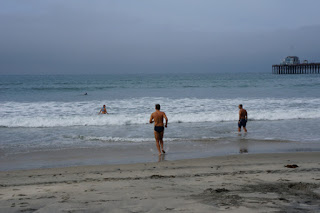
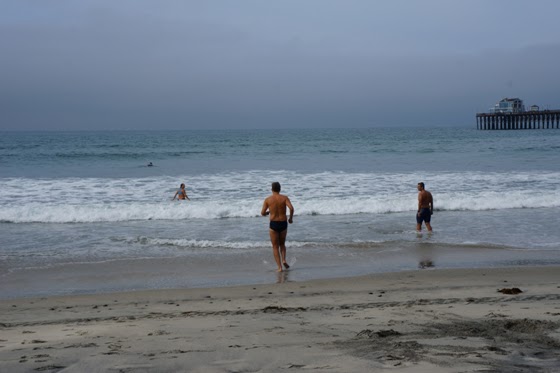
Nossa maior preocupação era a agua fria, depois do terror que o Fernandinho pegou em Alcatraz, mas no dia seguinte fomos à feira e demos um mergulho no mar sem roupa de borracha, alias como todos na praia e podemos constatar que nem estava tanto frio assim, pelo menos não era pânico como pensávamos.

Viajar com bike é sempre uma tensão, na ida já começou a
discussão sobre o tamanho da mala bike se era ou não passível de pagamento de
sobretaxa.

Paramos numa cidade no meio do caminho para almoçar e
visitar uma loja que Rafael queria comprar uma palmilha pra correr, não
diferente das outras a loja é mega descontos com força até nos lançamentos,
galera que gosta comprou o Nimbus 15 mais barato que o 14.
Combinamos com o Nuno e Carol de nos encontrarmos na Nytro,
chegamos faltando 10minutos pro fechamento e o pessoal da loja ja tava
impaciente, mas quando viram os gastos da brazucada abriram sorriso.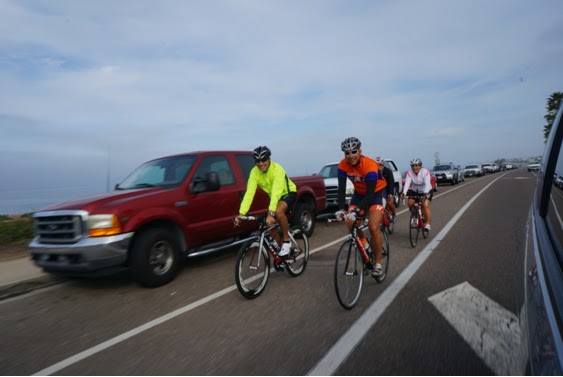
No dia seguinte após a montagem das bikes fizemos um rolé
muito legal indo do nosso hotel até a Nytro , pela PCH onde os triatletas top
do mundo treinam nos meses de inverno,
estando lá descobre-se pq é a meca do triathlon, estradas perfeitas com
bike lane enorme por toda a via, mais de 150km só costeando o mar, só fomos pro
interior de carro e percebemos a bike lane o tempo todo.
Como podemos observar na foto ficamos com muito medo do
frio, mas na verdade era só falta de costume rodamos 20km e no final já tava
quente.
Nossa maior preocupação era a agua fria, depois do terror que o Fernandinho pegou em Alcatraz, mas no dia seguinte fomos à feira e demos um mergulho no mar sem roupa de borracha, alias como todos na praia e podemos constatar que nem estava tanto frio assim, pelo menos não era pânico como pensávamos.
Kits pegos, bikes checadas e sacolas arrumadas, agora era só
descansar e curtir o momento, mas antes
de dormir tivemos uma discussão sobre qual era a melhor maneira de irmos pra
prova. Nosso hotel ficava a uns 700m da largada então alguns queriam arrumar a
bike e voltar pro hotel pra descansar e esperar sua bateria, o que se tornou
muito difícil, pois 2.500 atletas aprontando a bike ao mesmo tempo leva tempo. Fato
que me impressionou foi o patriotismo dos americanos em plena arrumação da
transição maior barulheira e de repente começa o hino nacional, todos sem
exceção pararam o que estavam fazendo e ficaram virados para a bandeira em
silêncio total, emocionante...
Tinha decidido usar um manguito no pedal, mas o locutor
anunciou que a temperatura da agua havia subido de 60 para 62,8 graus F.
enfatizando o 0,8, nós adoramos, porém um americano do meu lado ficou
visivelmente preocupado, indagando o porquê ela disse que se o mar esquentava
era sinal de calor principalmente na parte do ciclismo que não costeia o mar,
ou seja uns 70km, desisti do manguito confiando no local boy.
Nosso maior medo era a natação, agua fria e etc como já
comentei, bem esta foi a melhor e mais fácil parte da prova, fiz muito bem me
sentindo forte quando sai da agua. Bike começou bem com poucas subidas e muitas
curvas, algumas partes em bike lanes o que diminuiu muito o espaço pra pedalar
e alguns pelotões, mas nada demais por causa da largada da natação em baterias
(waves). Até o km 35/40 não muda muito, depois... . Depois o bicho pega com
força varias subidas fortes com até 13% de inclinação e vento forte
principalmente nas descidas, quem optou por rodas aero teve que ter habilidade
pra controlar a bike, até o km70/75 foi assim sobe e desce interminável, com
falsas retas que tinha que fazer muita força para sair do lugar, cruel, muito
cruel. Nos últimos 15km realmente e finalmente apareceram retas onde pude
desenvolver bem puxando 40km/h ultrapassei bastante gente neste momento e
cheguei forte na transição. Apesar do percurso bem difícil o visual das
montanhas com descampados e mar realmente ficou uma paisagem bonita, agradável
de pedalar e o tempo também ajudou ceu lindo azul, com sol sem esquentar muito.
Na corrida a coisa mudou, começou a esquentar logo na
largada, muita gente nas ruas incentivando parecia desfile de carnaval tinha
muita gente fantasiada também, todo posto de hidratação era uma festa. Na parte
das casas os gringos deram um show, com varias casa onde tinha som, agua, banho
de mangueira e muita festa. Lembro-me de
uma casa que tocava o musica do Rocky Balboa, e tinha uma senhora com luvas de
boxe cor de rosa, passei por lá dando uns jabs e a galera foi ao delírio, o que
me incentivou a correr mais forte. O calor só melhorava nas esquinas quando
batia um vento mais gelado, achei que tinha postos de hidratação demais
praticamente de 2,5 em 2,5k nem parei em todos. Como comecei a correr forte
paguei no final quebrei no 15, me arrastei até o 18 e fui pra morte até o
final, deu tudo certo.
A prova é maravilhosa apesar de o pedal ser difícil, mas com
visual incrível, natação show e corrida apesar de não ser fácil não tem nada do
outro mundo. Um público impagável é diversão na certa. Com vários amigos
fazendo a prova e curtindo o local juntos foi realmente uma viagem fantástica,
só tenho a agradecer ao Walter pelos incentivos nos treinos e aos companheiros
de treino e trip pelo carinho e companheirismo.

quarta-feira, 10 de abril de 2013
REVIEW DE PNEUS DE ESTRADA
PRODUCT REVIEWS: TIRE TEST: KENDA, MICHELIN, CONTINENTAL AND MAXXIS
Road Bike Action
Fonte:http://www.roadbikeaction.com/Product-Reviews/content/65/4964/Tire-Test-Kenda,-Michelin,-Continental-and-Maxxis.html

A famous tire guy once said, “There’s a lot riding on your tires.” He’s quite right, even if it was just the Michelin Man that said it. Speed, handling and comfort are all things that are directly affected by the rubber you’re rolling on. We chose top-level competition tires from four major brands— Continental, Kenda, Maxxis and Michelin—to put through a road test, capped off with a trip to the San Diego Velodrome for a rolling-resistance test.
TEST PROTOCOL
Each pair of tires was ridden approximately 200 miles, not enough to send each tire to its final resting place, but enough to realize its ride qualities. The tires were tested with between 100–120 psi on the same pair of wheels to ensure consistency. We rated the tires on a scale of one to five (one being poor and five being excellent) on comfort, cornering, durability and rolling resistance.
San Diego’s outdoor concrete velodrome gave us the ability to get objective data on the tires’ rolling resistance in a relatively controlled environment. We tested all the tires within a one-hour window to minimize changes in heat and wind conditions, keeping the results consistent. For the rolling-resistance test, each pair of tires was tested on the same pair of wheels at 110 psi. For our test, we performed the same protocol each time. After crossing the start line at exactly 25.0 mph, we coasted and timed how long it took to slow to 10.0 mph (the longer it took to slow, the better). We stayed on the black line at the bottom of the track and kept our body position the same to ensure wind resistance and distance accuracy for each test. We performed three tests on each pair of tires and averaged the results together (each test of the same tire stayed within one second of each other). Although our test was not as scientific as a drum test in a lab, it still gave us a good indication of how fast each tire is.
MICHELIN PRO3 RACE
The Pro3 Race comes into the Michelin line as their premier high-performance tire, replacing the Pro2 Race. It has a dual-compound tread, which features a 6mm band of rubber on the sides that has a lower durometer (measurement of rubber hardness—the lower the number, the softer the compound) for cornering traction and a higher durometer in the center to reduce rolling resistance and boost tread life. The Pro3 Race is currently the only clincher tire that can boast about being used in ProTour races. Every team at the ProTour level uses tubulars, with the exception of AG2R. The French team uses the Pro3 Race in the majority of their races. The Pro3 Race comes in 20c, 23c, and 25c widths and a myriad of color options.
RATINGS - MICHELIN
Comfort: 4
Between 100–105 psi (165-pound rider) was the ideal pressure for Pro3 Races. At that pressure, they stuck to the ground over rough pavement rather than bounce across the road like they would if they were overinflated. Even at 100 psi, they didn’t feel squishy or slow.
Cornering: 5
These things could carve a turkey at Thanksgiving. When leaning hard into a turn or setting up for the final corner in a crit, the Pro3’s dual compound shine through and give you the confidence to push it a bit faster and lean over a bit more.
Durability: 3
Durability is the big question mark with the Pro3 Race. Although they came through the test without any slices or cuts, we have had durability issues in the past with the older Pro2s.
Rolling resistance: 5
The Pro3 Race took 43.7 seconds to drop 15 mph on the velodrome, setting the benchmark for all the tires we tested.
BOTTOM LINE - MICHELIN
The Pro3 Race is nearly unbeatable when you factor in weight, price and ride quality. It’s already a proven tire at the top professional level, and we can see why. Also, they come in so many colors there’s sure to be one that matches your ride.
Weight: 205 grams
TPI: 127
Price: $69
Contact: Michelin Tires
KENDA KALIENTE PRO
The Kaliente is Kenda’s racing tire they developed with the help of their namesake professional racing team, Kenda/5-Hour Energy. Making the absolute lightest tire wasn’t their ambition; rather, they wanted to create a tire that was adequate in weight but still had puncture resistance of the Iron Cloak material, which runs from bead to bead, not just under the tread. Similarly to the Pro3 Race, the Kaliente Pro gets a dual rubber compound called R2C; this gives the sides a softer durometer than what’s used in the center. Kenda is known for offering a full line of performance tires at prices well below the competition, and the Kaliente is no exception. Although it comes in three color options, it’s only available in a 23c width.
RATINGS - KENDA
Comfort: 3
At similar pressures to other tires in the test, the Kaliente didn’t have quite the same suppleness. While the Iron Cloak puncture-prevention material is great for durability, it doesn’t lend itself to supple sidewalls.
Cornering: 4
Its R2C dual rubber compound provided a stable feel in the corners. Since most of the racing feedback Kenda received was from criteriums, it’s no surprise that the Kaliente had a controlled feel when being laid into a turn.
Durability: 5
The Kaliente is in it for the long haul. It is one of the few competition evel tires that provide puncture resistance across the entire tire, not just under the tread.
Rolling resistance: 2
A roll time of 40.1 seconds puts the Kaliente Pro 8.24 percent away from the top spot.
BOTTOM LINE - KENDA
The least expensive tire in the test had the highest rolling-resistance numbers, but held its own in the road test. It’s a good choice for a long-lasting tire that can be raced on the weekend and trained on all week too.
Weight: 230 grams
TPI: 120
Price: $50
Contact: Kenda Tires
MAXXIS CORMET
The Cormet takes the lightweight award. Coming in at 202 grams puts it 3 grams less than
the Continental GP 4000S and Michelin’s Pro3 Race’s 205- gram weight. Just as Kenda uses their pro teams for tire development, Maxxis works in conjunction with the UnitedHealthcare Professional team. The long-standing relationship between the two has helped develop Maxxis’ top-level clincher: the Cormet. A single rubber-compound tread with their nylon breaker, used for puncture resistance, are over the top of the ONE70 (170 TPI) casing—the highest TPI casing in their tire line. If you want a Cormet tire but can’t decide on width or color, Maxxis makes it an easy choice; the Cormet only comes in black and 23c.
RATINGS - MAXXIS
Comfort: 4
The Cormet seemed to dampen the ride, which was especially noticeable once we turned off the fresh pavement and hit rough, worn-down country roads.
Cornering: 4
The Cormet was designed with the needs of American racing in mind. Keeping traction at 25 mph in a 90-degree turn is just routine.
Durability: 3
The nylon breaker under the tread did well to ward off any debris trying to rob us of our air, but we did scuff the rubber off the sidewalls in a couple of places, which caused the casing to show through.
Rolling resistance: 3
Stopping the clock at 41.4 seconds puts the Cormet into third place, 5.26 percent off the Pro3 Race.
BOTTOM LINE - MAXXIS
The Cormet was the lightest, as well as the highest TPI, out of all the tires in the test, which factored into its comfortable ride. UnitedHealthcare Pro Cycling Team helped Maxxis design a well-gripping tire for just about any application.
Weight: 202 grams
TPI: 170
Price: $76
Contact: Maxxis Tires
CONTINENTAL GRAND PRIX 4000S
The 4000S causes some confusion in the Grand Prix 4000 line. The 4000S looks identical to the 4000 (except for color), but the differences are more than meets the eye. A combination of synthetic and natural rubbers make up the Black Chili compound of the 4000S, which is claimed to have 26 percent lower rolling resistance, 30 percent better traction and a 5 percent increase in tread life versus the Activated Silica compound used in the standard 4000 tire. The Black Chili rubber compound was developed by Continental’s motorcycle racing division—you know, the guys that go 150-plus mph on two wheels. The 4000S gets a Vectran layer under the tread for puncture resistance, as well as wear indicators in the tread so you know when to retire it. Available in 23c and 25c widths.
RATINGS - CONTINENTAL
Comfort: 3
The GP 4000S has a firm feel at the same pressure we ran with the other tires. It wasn’t a rough ride, but “solid” is the best description.
Cornering: 4
Although we couldn’t push the Black Chili compound as hard as the motorcycle guys do, we were impressed with the consistent feel of the single compound rubber.
Durability: 4
We spent over 600 miles on the GP 4000S in the month of May during a bike test, all without any flats or cuts. In the first 100 miles of the tire test, we flatted from a thorn—go figure. This is a tire that should easily last 2000-plus miles and is equally as good as a race or everyday tire.
Rolling resistance: 4
A time of 42.5 seconds nets the GP 4000S a second-place finish, 2.76 percent off the winner.
BOTTOM LINE - CONTINENTAL
The GP 4000S is one of the best all-around performers out there. The Black Chili compound is superior to its predecessor, with lower rolling resistance and better durability.
Weight: 205 grams
TPI: Continental uses three plies that are each 110 TPI
Price: $75
Paris - Roubaix 2013 - The other side of the race - "Hell" With translat...
este vídeo foi sugerido por André Smilgin
FIM DE SEMANA 13 / 4
SABADO
·
IRON 2013 - 100 + 30
, se for no joá , ate o mirante do leblon
· 70.3 de brasilia / Tri short ou olímpico / - 80kms
·
Le Etape 2013 / GRAN FONDO
rio magé - 150kms
· CICLISMO
barra 80kms ou montanha 2hs livre
6:45 na loja renato estrella
6:30 no forza - triathlon
6:45 no forza - ciclismo
7:30
na padaria sec XX
DOMINGO
CORRIDA
em
função do training camp a corrida de domingo podera ser feira em local segundo
sua conveniencia
IRON 2013 - descanso
MARATONA DO RIO - 18KMS
MEIAS MARATONAS - 16KM
CICLISMO
inicio:
7:30 no leblon / 7:48 na nissan em são conrado
trajeto:
canoas
+ alto + desce o alto ate o itanhangá + sobe alto + vale


segunda-feira, 8 de abril de 2013
Campeonato Carioca de Ciclismo - Prova de tres Rios
Paulo Roberto de Oliveira......... 1o colocado na Master B com uma vitória onde escapou do pelotão chegando 42seg a frente. Parabéns


Golden Four Asics
PARABENS AOS ATLETAS NA PROVA GOLDEN FOUR ASCIS e aos ilustres atletas que foram torcer por todos.
Uma prova que começa bem cedo e contempla a orla do Rio do recreio dos bandeirantes ate a chegada em São Conrado. Dos 21km, pelo menos 20km estão com o cenário do mar ao lado. Uma ótima prova para ser realizada.
adriana dex, alessandro falkovisk, alexandre amador, ana bocanera, andre cardoso, andrea ramos, anisia beber, arleston, ashbel, auremar, bruno autran, cadu vigilia, chico abreu, claudia darma, cristiano beber, daniel pain, duda daud, edgar solano, eraldo, flavia guedes, flavinha cruz, gilberto marques, gustavo batalha, helio bonora; henrique fontenelle, henrique s, ingrid robaina, isabella chame, kelsy hardt, , leticia d,luiz augusto , lulu magalhaes, marco capitao, maria , maria cecilia erthal, melina , guedes, marcus dantas, nathalia ventura, pedro scripilitti, priscila aguiar, rafael godoy, , renato monteiro, rodrigo regis, roger , rogerio beer, rogerio lobo, ze luiz, tatiana landa e wislam

Uma prova que começa bem cedo e contempla a orla do Rio do recreio dos bandeirantes ate a chegada em São Conrado. Dos 21km, pelo menos 20km estão com o cenário do mar ao lado. Uma ótima prova para ser realizada.
adriana dex, alessandro falkovisk, alexandre amador, ana bocanera, andre cardoso, andrea ramos, anisia beber, arleston, ashbel, auremar, bruno autran, cadu vigilia, chico abreu, claudia darma, cristiano beber, daniel pain, duda daud, edgar solano, eraldo, flavia guedes, flavinha cruz, gilberto marques, gustavo batalha, helio bonora; henrique fontenelle, henrique s, ingrid robaina, isabella chame, kelsy hardt, , leticia d,luiz augusto , lulu magalhaes, marco capitao, maria , maria cecilia erthal, melina , guedes, marcus dantas, nathalia ventura, pedro scripilitti, priscila aguiar, rafael godoy, , renato monteiro, rodrigo regis, roger , rogerio beer, rogerio lobo, ze luiz, tatiana landa e wislam

domingo, 7 de abril de 2013
sábado, 6 de abril de 2013

sexta-feira, 5 de abril de 2013
Vuelta al País Vasco - 6a etapa
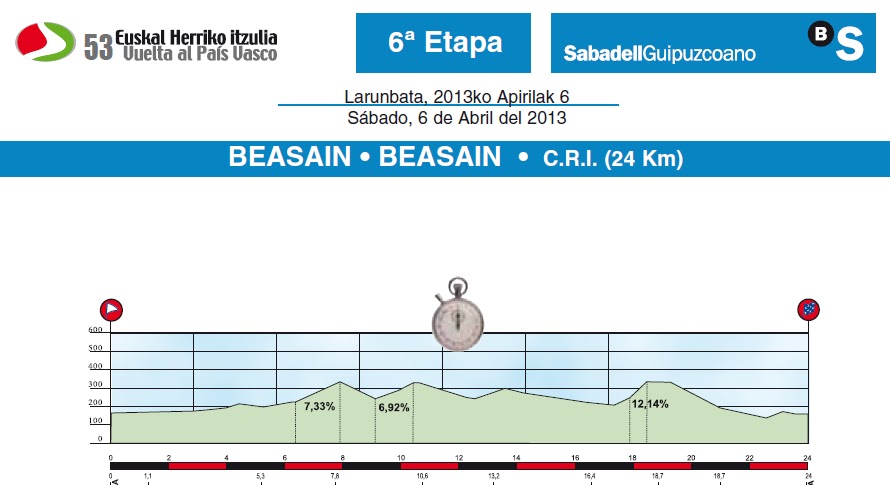
A etapa de amanha desta volta sera uma das mais emocionantes ja que a classificacao , conforme o quadro abaixo, esta muito apertada entre os 6 primeiros colocados.
No gráfico abaixo vemos que será um contra relogio que decidirá a Vuelta. Emoção do inicio ao fim

quinta-feira, 4 de abril de 2013

70.3
de brasilia / Tri short ou olímpico / - 80kms
Iniciantes
com a Prof Rita no alphaville
Le Etape 2013 / GRAN FONDO / CICLISMO
barra 20km + alto/paineiras/dona
marta/ceat/sumare/cx d agua/vale
estrada - 135km
zona sul - vista/mesa/cristo/dona
marta (somente passar)/ceat/sumare/cx d agua/vale
6:45 na loja renato estrella
6:30 no forza - triathlon
6:45 no forza - ciclismo
7:30 as 9:15 no alphaville
7:30
na padaria sec XX
Vale da Lua em Itaipava
(Pinheirinho).
Treino em trilhas técnicas,
dificuldade média.
07:30 da manhã na Casa do
Alemão em Itaipava.
DOMINGO
CORRIDA DA ASICS
IRON - PLANILHA MASTER - SEGUIR A
DISTANCIA RECOMENDADA
MARATONA DO RIO - 18KMS
MEIAS MARATONAS - 16KM
em
função da asics, não havera aquario no domingo
a corrida de domingo sera em local e horario
livre
Ciclismo
em Tres Rios - campeonato estadual
quem
estiver na cidade, 60 min de montanha livre
Assinar:
Postagens (Atom)