quarta-feira, 10 de abril de 2013

FIM DE SEMANA 13 / 4


SABADO


·        IRON 2013  - 100 + 30 , se for no joá , ate o mirante do leblon

·       70.3  de brasilia / Tri short ou olímpico / - 80kms

·        Le Etape 2013 / GRAN FONDO

rio magé - 150kms


·       CICLISMO

barra 80kms ou montanha 2hs livre


6:45  na loja renato estrella  

6:30 no forza - triathlon

6:45 no forza - ciclismo

7:30  na padaria sec XX

DOMINGO


CORRIDA

em função do training camp a corrida de domingo podera ser feira em local segundo sua conveniencia


IRON 2013 - descanso

MARATONA DO RIO - 18KMS

MEIAS MARATONAS - 16KM


CICLISMO

inicio: 7:30 no leblon / 7:48 na nissan em são conrado

trajeto:

canoas + alto + desce o alto ate o itanhangá + sobe alto + vale


QUAL O REAL VALOR DE UMA RODA DE CARBONO?

fonte: http://www.cyclingtips.com.au/2012/08/where-is-the-value-in-a-carbon-wheelset/

 _MG_5634

Professional riders use them all the time while many manufacturers claim that you will benefit from significant time and power savings, but does that mean a carbon wheelset is good value for money? When coffee shop conversation turns to upgrades, a lot of riders think of wheels. Indeed, I get more clients asking about wheelsets as an upgrade than any other part of the bike, and it's surprising how well informed they are. Forgive the generalisation, but for an enthusiast it seems wheels are to road bikes what engines are to cars.

Judging from the way the factory wheelset market has grown over the last ten years, I’m guessing plenty of riders are acting on the urge to upgrade their wheels. Sitting at the top of this market, like an exotic gemstone, is the carbon wheelset, the ultimate upgrade that promises to deliver the same kind of boost to a rider’s power and performance as nitrous can deliver to a car. Such benefits come at a significant cost, yet this end of the market has grown too. Now lower-priced options are starting to appear and I wonder if the industry is poised to abandon aluminium for wheelsets in the same way aluminium was abandoned for frames. As unlikely as that may seem, how many riders would have predicted the coming dominance of carbon framesets 15 years ago when the material was too expensive, unproven and even unreliable?

The wheels that were at the leading edge of the rise of carbon wheelsets, the Lightweight Obermayer.

The value, according to the hype
According to the marketing hype, the value of a carbon wheelset lies with its weight and superior aerodynamics. The weight saving afforded by carbon is well known and readily demonstrated; the material also ushered in the current era of aerodynamic wheel design. Consider Campagnolo Shamals from the mid-90s, the alloy rims were around 40mm tall and the wheelset weighed 1980g, yet they were considered a breakthrough in aerodynamic design. Now carbon wheelsets feature rims that are as tall (or even taller) and weights have dropped below 1500g.

Carbon may come in only one colour, but there is plenty of variation in the number finishes that are available.
 
Another advantage of carbon is that it can be molded and the companies leading aerodynamic wheel design have been able to design wind-cutting profiles with the help of wind tunnel testing and fluidics. Current marketing efforts have provided riders with a basic understanding of aerodynamics along with hard data (of sorts) so they can compare the drag and stall of different rims or wheel designs before making a decision to buy.

A typical example of the drag data that is generated from wind tunnel testing. Note the characteristic dip in drag for a lot of wheels between 10 and 15 degrees yaw demonstrating that the lowest drag for any wheelset can only be achieved at a discrete angle rather than over a broad range of wind angles. Data taken from Bontrager's 2011 white paper on the development of their Aeolus D3 wheels (http://media.bontrager.com/images/features/201108_aeolus/bontrager_aeolus_d3_wheels.pdf).
Carbon rims and wheels also benefit from an impressive stiffness to weight ratio. We all know from the performance of carbon frames that the material can be very stiff, and carbon rims are typically engineered to be very stiff so as to allow low spoke counts. At the same time, carbon wheelsets can offer a smooth and compliant ride, so gram for gram, they easily outperform aluminium in this arena.
Low weight, superior aerodynamics and stiffness to weight, these traits are of enormous value when performance is the primary consideration, but at what point does a set of carbon wheels seem overpriced?
The shortcomings of carbon wheels
Consider the drawbacks of carbon wheels for a moment: tall rims may provide some aerodynamic advantage in favourable conditions, but they will rob a rider of their confidence (or worse, control of their bike) in crosswinds. Clearly, such wheels are far from versatile. In addition, the reduction in drag promised by a particular wheelset does not apply in every wind direction, such that minor changes in a rider’s direction relative to the prevailing wind can produce a huge change in drag that is associated with the familiar and consistent dip in drag at 10-15° yaw (see this article for more detail on this phenomenon). I don’t doubt that the data from wind tunnel tests is reliable and reproducible, but I have a question about how well it translates to the real world. The scientists devoted to measuring aerodynamic drag insist on a highly controlled environment to measure drag because variation in wind speed and direction can ruin their ability demonstrate a significant change. Put another way, differences in aerodynamic drag are typically so small that they can only be measured in isolation of all other factors. Hence, a lot of the available data has been measured for the performance of the wheel only, rather than after it is fitted to a bike. Bontrager explore the difference a bike can make to aerodynamic drag in their recent white paper, albeit with a highly aerodynamic TT frameset, and found that the savings in drag were maintained or even enhanced, depending on the angle of the wind. However, it remains unclear if this is the case for all bikes, so at best, the time or power savings promised for a wheelset have to be interpreted as a theoretical maximum that may not be fully or consistently realised in the real world.

It is now a lot more common for wheelsets to have warning stickers regardless of whether they are carbon or aluminium.
I find there is an amusing irony in the poor braking performance of carbon rims that have been engineered to be faster than standard alloy rims. Manufacturers have worked hard to improve braking performance of carbon rims so that it is starting to approach that of alloy rims, however, overheating of clinchers still threatens to cause a tire blowout after long periods of heavy braking (ie long, steep descents). Some companies (eg Reynolds, Enve) have developed specific brake pad compounds to reduce heating and strictly insist on their use. The problem still persists, and now some organisers of mass participation rides in the US are preventing riders from using carbon wheels. Red Kite Prayer recently highlighted this issue and found that overheating and rim failure may be more common for carbon clinchers. Unfortunately, the industry remains coy about the issue, but it seems more effort is required to solve the braking problems of carbon with some predicting that the move to disk brakes will address the issue. For now, it is a definite shortcoming that weakens the value of a carbon wheelset.

Swissstop Yellow King brake pads work well on a lot of carbon rims yet the company claims their new Black Prince pads are more effective and generate less heat.
So what of the strength and durability of a carbon wheelset? After more than a decade of manufacture, it’s fair to say that there are fewer concerns about the strength of carbon for framesets (and perhaps wheelsets), however the material is still susceptible to impact. Sifting through the marketing material from various wheel manufacturers, few emphasise the strength of their rims, so if there is any data on the durability of the rims (especially the brake tracks), then the manufacturers are reluctant to share it. Zipp highlights their use of Kevlar reinforcement for the edge of their tubular rims (“Carbon Bridge“) while they employ woven carbon fibre (instead of the uni-directional fibres that are used throughout the rest of the rim) around their spoke holes for added strength. In contrast, Enve mold the spoke holes into their rims to improve the strength of their rims. I can’t say whether these strategies deliver on their promises, but they are the sort of details lacking from lower priced and nameless options from China or elsewhere.
A lot of riders that own carbon wheels keep them in the cupboard for race days or special events. Personally, I don’t think there is a lot of value in a wheelset that spends more time off the bike than on, but I can understand the extra caution where thousands of dollars are concerned. Replacing a carbon rim is a costly exercise even when taking advantage of the crash replacement programs offered by many companies. Are carbon wheels tough enough for every day use? Aside from proposed weight limits, the manufacturers can’t dictate how their wheels should be used, but some (eg. Zipp) seem to favour the race day only approach. In contrast, other companies (eg. Enve) promote their rims and wheels for everyday use. As far as I can tell, the only concerns associated with everyday use is a greater risk of mishap and an increased rate of wear. There is no hard data on how long it takes for a carbon rim to wear out, though some anecdotal reports suggest it is longer than aluminium. On balance, I don’t think there is much evidence that supports the limited use of a carbon wheelsets, as long as you accept the associated risks. Jason Woznick fromFairwheel Bikes shared a great video in support of this notion–the boys from Arizona ride their carbon wheels as hard and as often as alloy wheels:

Considering the alternatives
It is possible to buy or assemble a set of alloy wheels that dip below 1200g for less than $1500, but there isn’t much choice. Stan’s offers their Alpha 340 rim, which is tubeless ready (385g) that can be paired with a lightweight set of hubs (eg. Dash), while American Classic has two wheelsets, a new tubeless wheelset that weighs in at 1179g, and their magnesium wheelset (1108g). Just recently, I’ve heard about Spada Oxygena wheels that also weigh in under 1200g. However, don’t expect these wheels to be as robust as a standard alloy wheelset. Just like carbon, they have specific requirements or shortcomings when it comes to spoke tension, brake pads, and/or tire mounting (eg. see the recent review of the American Classic tubeless wheelset at Pezcyclingnews). I also doubt any of them will satisfy a sprinter’s needs.
Final thoughts
When I set out to write this article, I didn’t have a preformed conclusion though I suspected that the question of value depended on a rider’s resources. The major brands may not have solved all of the shortcomings (yet) but as a package, carbon wheels are hard to beat. Alloy wheels cannot offer the same combination of weight, stiffness and aerodynamics but they are undeniably more cost-effective. My time as a bike mechanic and wheel builder has proven to me that the axiom, you get what you pay for, applies without fail to bikes and bike parts. The value of a wheelset (or any other product, for that matter) ultimately depends on how well it serves the needs of the buyer/rider. If a buyer wants a high-priced set of carbon wheels because they enhance the appearance of their bike, then they may get their money’s worth. In contrast, a struggling C-grader with limited time to train may feel a little ripped off when the race wins don’t come any easier after dropping $3K on the same set of wheels. My advice, the only sound advice, is first decide on your needs, and then set about finding the product that completely satisfies them.

segunda-feira, 8 de abril de 2013

PARIS ROUBAIX 2013 - FULL VIDEO


Campeonato Carioca de Ciclismo - Prova de tres Rios

Paulo Roberto de Oliveira......... 1o colocado na Master B com uma vitória onde escapou do pelotão chegando 42seg a frente. Parabéns


Golden Four Asics

PARABENS AOS ATLETAS NA PROVA GOLDEN FOUR ASCIS  e aos ilustres atletas que foram torcer por todos.

Uma prova que começa bem cedo e contempla a orla do Rio do recreio dos bandeirantes ate a chegada em São Conrado. Dos 21km, pelo menos 20km estão com o cenário do mar ao lado. Uma ótima prova para ser realizada.


adriana dex, alessandro falkovisk, alexandre amador, ana bocanera, andre cardoso, andrea ramos, anisia beber, arleston, ashbel, auremar, bruno autran, cadu vigilia, chico abreu, claudia darma,  cristiano beber, daniel pain, duda daud, edgar solano, eraldo, flavia guedes, flavinha cruz, gilberto marques, gustavo batalha, helio bonora; henrique fontenelle, henrique s, ingrid robaina, isabella chame, kelsy hardt, , leticia d,luiz augusto , lulu magalhaes, marco capitao, maria , maria cecilia erthal, melina , guedes, marcus dantas, nathalia ventura, pedro scripilitti, priscila aguiar, rafael godoy, , renato monteiro, rodrigo regis, roger , rogerio beer, rogerio lobo, ze luiz, tatiana landa e wislam


sexta-feira, 5 de abril de 2013

Vuelta al País Vasco - 6a etapa

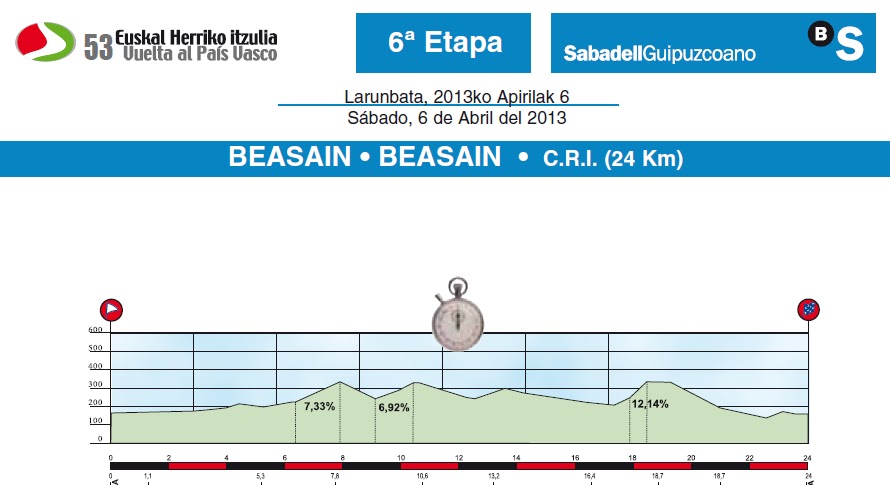
A etapa de amanha desta volta sera uma das mais emocionantes ja que a classificacao , conforme o quadro abaixo, esta muito apertada entre os 6 primeiros colocados.

No gráfico abaixo vemos que será um contra relogio que decidirá a Vuelta. Emoção do inicio ao fim 


Vuelta Ciclista al pais Vasco - 5a etapa - ultimos kms


quinta-feira, 4 de abril de 2013


SABADO  
IRON 2013  - 140km ou 100km ( asics), series de 8/ 2km após o km 30
70.3  de brasilia / Tri short ou olímpico / - 80kms
Iniciantes com a Prof Rita no alphaville
Le Etape 2013 / GRAN FONDO / CICLISMO
barra 20km + alto/paineiras/dona marta/ceat/sumare/cx d agua/vale
estrada - 135km
zona sul - vista/mesa/cristo/dona marta (somente passar)/ceat/sumare/cx d agua/vale
 
6:45  na loja renato estrella  
6:30 no forza - triathlon
6:45 no forza - ciclismo
7:30 as 9:15 no alphaville
7:30  na padaria sec XX

 
MTB - PROFESSOR EDUARDO

Vale da Lua em Itaipava (Pinheirinho).

Treino em trilhas técnicas, dificuldade média.

07:30 da manhã na Casa do Alemão em Itaipava.

 
DOMINGO

 
CORRIDA DA ASICS

IRON - PLANILHA MASTER - SEGUIR A DISTANCIA RECOMENDADA

MARATONA DO RIO - 18KMS

MEIAS MARATONAS - 16KM


em função da asics, não havera aquario no domingo

 a corrida de domingo sera em local e horario livre


Ciclismo em Tres Rios - campeonato estadual

quem estiver na cidade, 60 min de montanha livre


Vuelta al País Vasco - 5a etapa


Vuelta Ciclistica al Paises Bascos - chegada 4a etapa


quarta-feira, 3 de abril de 2013

PARIS ROUBAIX 2012

No próximo domingo teremos mais uma prova clássica do ciclismo Internacional. Paris - Roubaix com 257,5km sendo 52,6km em piso de paralelepípedo e que tem seus metros finais dentro de um velódromo. Abaixo os últimos vencedores e os trechos no paralelepípedo.
 
Uma das provas que representa a dureza do ciclismo em todos os terrenos. Apesar de não tem um perfil altimetrico que representa dificuldade, pois a prova é quase toda plana, trechos de terra, paralelepípedo e asfalto dao uma toque a mais nessa prova.
  
no site : http://www.steephill.tv/classics/paris-roubaix/  você poderá assistir esta prova ao vivo
 
 
quem será o VENCEDOR de 2013? , abaixo os vídeos de 2012, 2011 e 2010


últimos vendedores  
fonte : www.cyclingnews.com


os trechos de paralelepípedo:
fonte: http://www.letour.fr/indexPRX_us.html
 

Vuelta al País Vasco - 4a etapa e Final da Etapa de hoje

Vídeo da final da etapa 3 , com os últimos 500m com uma inclinação de 21%


Lideraça Esportiva , por Bruno Germano


Você sabe o que significa esse termo ???

Diego Maradona - sim, me refiro aquele argentino, "gordinho", folgado, drogado e mau exemplo- não atingiu o patamar que chegou a toa.

Não há dúvidas de que um dos principais fatores de Diego ser "Deus" para o seu povo, foi a sua capacidade de ser Líder do seus colegas.

Ao seu lado, atletas extremamente limitados, cresciam.

E assim como como Maradona, a história dos esporte nos mostra outras tantos atletas que tem capacidade.

O Líder esportivo consegue enxergar além do seu crescimento. Ele "vê" que a evolução do seu companheiro é tão fundamental qto a sua.

Ele tem o exato feeling entre "acelerar" pra incentivar, ou diminuir pra esperar. Ele não compete com o amigo, afinal, ele é seu COMPANHEIRO.

E, acreditem, no final, ele ainda vence (qdo compete com os outros).

 
Trazendo pra nossa realidade: vc ainda acha que o ciclismo não é um esporte coletivo???

Vc acha mesmo que simplesmente fazer força te faz um atleta melhor???

É muito dificil pra vc (já que vc é "tão bom") colocar o seu talento em prol de um outro atleta ???

Fazer um movimento brusco ao desviar do buraco; acelerar enquanto um onibus sai do ponto; avançar um sinal mesmo vindo um carro; desviar pruma outra faixa só pra não perder o embalo;  será que vc já parou pra pensar que vc pode estar influenciando um "novato" a fazer o mesmo (ora, se vc é bom, é em vc que ele vai se espelhar)???

Todas estas indagações se resumem numa unica questão: "Vc é capaz de ser um líder esportivo, dando exemplo, e fazendo com que seu companheiro de treino cresça???

Pense nisso...
 
" Estive em 1996 no período  preparatório  para as Olimpíadas de Atlanta, avaliando a seleção Brasileira de Basquete com um Prof amigo, Astrogildo Junior. Após os testes serem realizados , no fim do dia o técnico da época, Ari Vidal, convocava os atletas para um bate bola. A maioria cansada, fazendo corpo mole. De repente, levanta o Oscar (foto) e simplesmente pega a bola e comenta: sou o mais velho, provavelmente a minha ultima Olimpíada, quem tem vontade de vencer, levanta e vem treinar comigo. Neste momento, todos se levantaram e treinaram como se fosse a primeira hora do dia" .
Walter Tuche

terça-feira, 2 de abril de 2013

segunda-feira, 1 de abril de 2013

CAPE EPIC 2013

Por Henrique Werneck

publicado em:


VICTOR COSTA28.03.2013 20h21m

“Difícil começar a falar do desafio mais difícil que passei na minha vida esportiva. Minha ‘carreira’ esportiva se intensificou mais em outubro de 2010 quando entrei na Walter Tuche Assessoria Esportiva. Até então havia participado de uma maratona em 2005, uma meia maratona no mesmo ano e a Volta a Ilha (Florianópolis) em 2003. Essas competições todas sem nenhum acompanhamento profissional. Somente com os treinamentos para manter a forma.

Procurei ajuda da assessoria, pois queria fazer o Ironman Brasil de 2011. Nunca tinha feito um triatlo sequer, mas tinha esse sonho. No caminho do Iron, realizei diversas corridas de rua, travessias aquáticas e um triátlon olímpico. Passada a competição principal, tomei gosto verdadeiro pela coisa e fiz dos treinamentos um novo modo de viver. Realmente encontrei o que queria e precisava para minha vida. Veio Pirassununga, Caiobá, Xterra, Big Biker, uma ultramaratona de 50k offroad, 70.3 Miami entre outras provas. Assim mesmo sem foco, mudando a modalidade, o que sempre busquei foram desafios diferentes.
No segundo semestre de 2012 meu amigo David Klabin me convidou para ser seu parceiro no Cape Epic. No final de 2012 começamos os treinos na terra juntos. Seria muito importante nos conhecermos melhor e saber os pontos fracos e fortes de cada um. Coisa que foi acontecendo fim de semana a fim de semana que conseguíamos treinar juntos, e foram vários! Treinos de 4, 5, 6 e até 7 horas por dia. Teve uma semana que cheguei a treinar 500km com 17000 de ascensão acumulada.

Nunca fico apreensivo com competições e essa não foi diferente. Fiz minha parte, treinei duro. Sabia que podia ter êxito se tivesse sorte em não quebrar a bike e também não me machucar e algum tombo. Também tinha muita confiança no meu parceiro. Ele sempre andou mais forte que eu nos treinos. E isso se repetiu na prova. David tava um monstro!

Chegamos em Cape Town (Cidade do Cabo, em português), na África do Sul, com 4 dias de antecedência para prova. La são 5 horas de diferença pro Brasil. Não tive nenhum problema com isso e no dia seguinte já estava dentro do fuso. Já o David não aconteceu a mesma coisa e ainda veio um resfriado que teimou em ficar até o prólogo.


A estrutura e staff da prova é de primeiro mundo. Check in feito na véspera da prova partimos pro lugar da largada que ficava a menos de uma hora de Cape Town, em Meerendal Wine State. Os atletas ficam alocados em tendas nos campings super organizadas nos locais da competição. Uma super estrutura é montada para atender os atletas. Alem das tendas individuais para dormir, tem as tendas de alimentação, tendas dos ‘riders’ para descanso com espreguiçadeiras, sofás e pufs, banheiras de gelo e massagem, tendas com TVs e computadores, tendas das marcas e oficinas de bicicletas, tendas com roupas e produtos alimentícios etc...

Um circuito de 23kms com 700mts de subida. Um visual incrível que mesclava subidas com partes técnicas, descidas rápidas em cascalhos soltos fizeram as primeiras vitimas. Ali deu pra perceber que nada seria fácil nos próximos 7 dias. O calor já era bastante ao contrario do frio que fazia ao acordar. Os extremos no mesmo dia. E assim foi até o último.

O primeiro dia real de competição, Stage 1 em Citrusdal, foi violento! Entre os competidores no dia seguinte, alguns com vários Capes nas costas, se escutava dizer que foi um dos piores percursos já realizados. Pra mim e pro David não foi difícil acreditar! Fizemos essa etapa em 8h40m. Muitos trechos com areia fofa e subidas íngremes intermináveis fizeram vários pelotões de bikes sendo empurradas... Ali muita gente já ficou pelo caminho. O desgaste foi enorme.

No dia seguinte já era o estagio mais longo da competição: 145kms com 2350 de subida. Apesar do dia anterior, estávamos bem. Nosso plano era completar o Cape sem se importar com o tempo. Era dia após dia sem pensar muito pra frente. Assim foi até o Stage 7.

Em uma maratona como essa, o tempo livre passa muito rápido. Mas isso não impediu de fazermos uma grande amizade com a dupla mineira Thiago e Felipe. Dois caras que ajudaram muito a gente durante a competição. Experiente e muito brutos no pedal, terminaram em 106 geral e 68 na categoria. Foi a segunda melhor dupla brasileira ficando somente atrás do Abrãao Azevedo que ganhou na categoria Master e ficou em 11º no Geral, um monstro que formou dupla com o sulafricano Nico Pfitzenmaier.
 
 
Dia após dia foi passando. Estagio a estagio. Apesar de nenhuma dor muscular e nenhum tombo sofrido, a posição na bike e a lombar iam ficando prejudicadas. Parece incrível mas tive a impressão de ir ficando mais forte com o passar das etapas. Isso aconteceu até o 70km do 6° estagio. Nesse dia eram 100km com 3000 de subida acumulada. Vinha bem nesse dia e de repente minha força acabou. Parecia carro sem gasolina. Não tinha dor! Tinha comido e bebido bem!! Não entendia o porque daquilo! As subidas eram no pratinho e no sufoco. Rezava pra chegar logo no próximo ponto de hidratação. Eram sempre 3 pontos por dia. Faltava o último daquele estagio. Me arrastei ate la. David queria que eu fosse no médico, sentasse, esfriasse... Pensei justamente o contrario. Fiz tudo correndo, me hidratei, comi, me abasteci da melhor maneira que dava, sabia que se eu esfriasse poderia ser meu fim. Seria difícil reaquecer e completar os vinte tantos quilômetros finais. Subi na bike e uma sensação estranha tomou conta de mim. Não conseguia me mexer. Pensava em tudo. O porquê de estar ali. Na família, na namorada. Os amigos! As pessoas que nem conheço e mesmo assim me davam força todos os dia pelas redes sociais. Aquilo me fez chorar.. Nessa hora David me mostrou a razão dessa prova ser em dupla. Falou tudo que eu precisava escutar. Fomos em frente e fui voltando aos poucos ate chegar a linha de chegada. Depois disso já me sentia com a medalha no peito. Já havia entendido o significado da prova.

Mas ainda faltava um dia!!! Sim, o grande dia! Seria o estagio mais curto da prova. Uma espécie de gratificação por ter chegado ate ali. 54km com 1500 de subida. Foram mais 3h50m de mountain bike.
Foi uma etapa de reflexão e por minha parte um pouco de apreensão por causa do dia anterior. Será que sentiria aquilo de novo? Fiquei pensando em tudo que havia visto naqueles oito dias de competição. Nos incríveis visuais que passamos, nas pessoas que conhecemos, na oportunidade enorme que estava tendo ali. Estava feliz de verdade. Foi uma prova muito dura. Trechos difíceis e muito técnicos. Descidas em pedras e cascalhos a 60km/h. Muitos riscos e graças a Deus sorte por ter voltado inteiro pra casa.

Nada na vida de faz sozinho. Em um mundo cada vez mais egoísta, onde o ser humano cada vez mais desrespeita o próximo e seu meio ambiente, 50hs de mountain bike me ajudaram bastante a pensar em muitas coisas. Fico muito feliz em saber que um amigo fez uma prova por minha causa ou que completou um objetivo inspirado nas minhas realizações pessoais. Essa troca que vale a pena! É por isso que estamos aqui!

Gostaria de agradecer a minha família e amigos, a todas as pessoas que sofreram e torceram por mim e em especial ao Walter Tuche, Dudu Gomes, galera da Assessoria, Gatorade, 3Shop, Henrique Polar Frequencimetro, Pedro Monteiro e pessoal da Effect Sport, Bernardo Fonseca, Robertinho Catão, Claudio Kligerman e familia, Galt Capital. David Klabin, conte comigo para o que precisar parceiro!
Henrique Werneck"


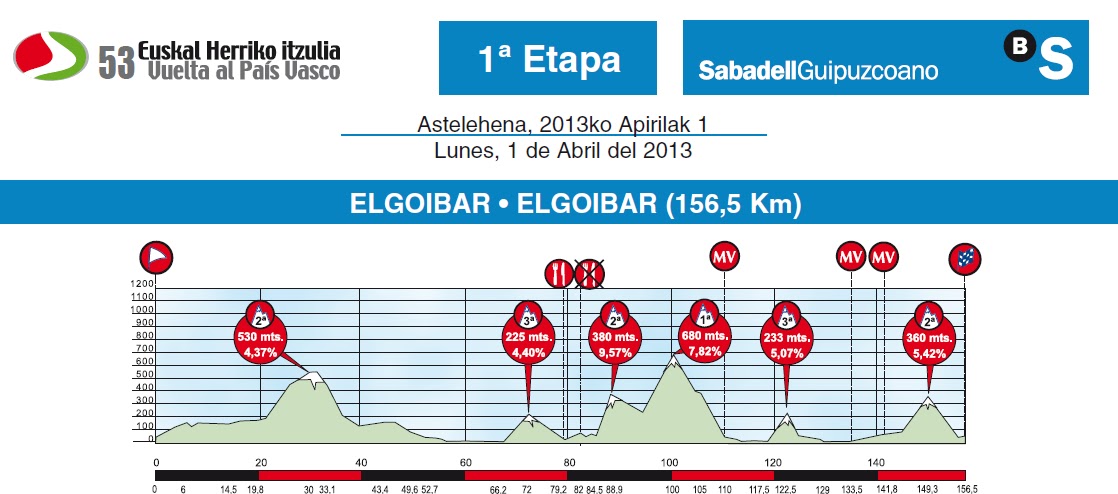
VUELTA AL PAIS VASCO 2013

site da prova , clique aqui


etapa de hoje - vídeo do ultimo kilometro


2a etapa, amanha


TOUR DE FLANDERS 2013

Fabian Cancelara vence mais uma vez e no minuto 23 do vídeo , o impressionante ritmo imposto que o faz largar o pelotão e vencer esta clássica do ciclismo. Vale ressaltar que faltando 30 kms para o fimd a prova ele já fem trazendo o grupo todo e neutralizando as fugas.